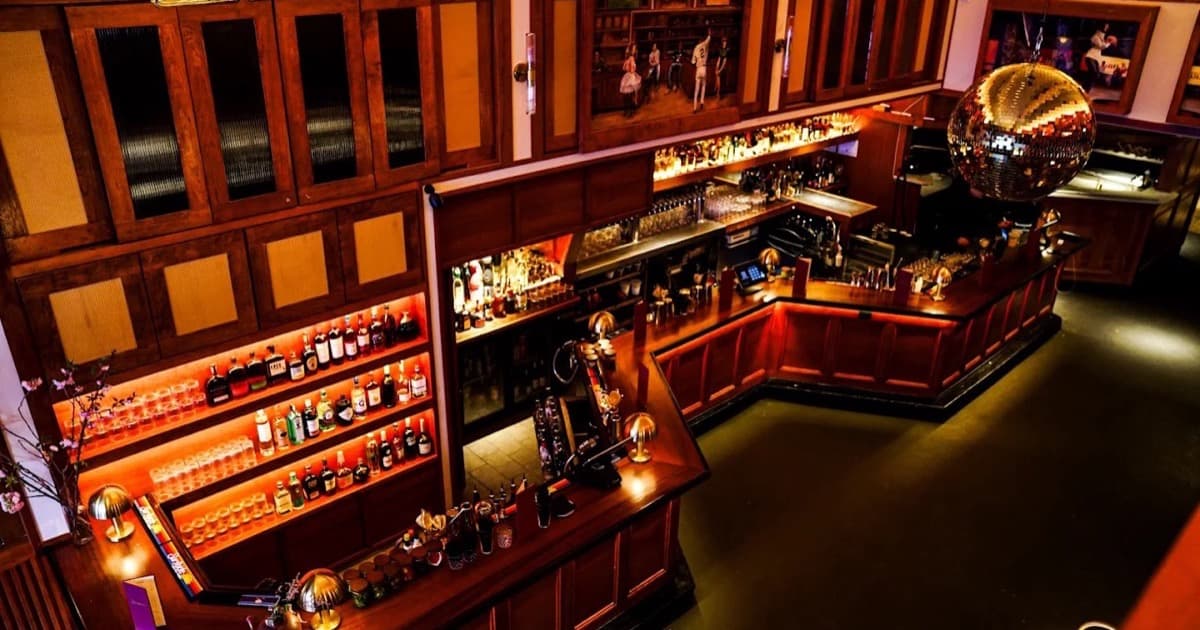
A bar or nightclub runs an accounts payable problem that looks nothing like a typical small business and only partly like a restaurant. The bulk of your spend flows to three or four liquor distributors. The three-tier system dictates how and when you can pay them. Your beverage cost of goods splits into a dozen subcategories that matter for margin. And a meaningful chunk of every week's payments goes out the door to people who never send a traditional invoice: DJs, security, promoters, and performers, most of them 1099 contractors.
Generic AP tools and POS-bundled bill pay miss almost all of this. This guide is for owners and controllers who have felt that gap. We cover the evaluation criteria that actually matter for a high-volume bar program, the four categories of tools competing for your spend, real pricing, and the red flags that predict a painful rollout.
Why bars and nightclubs are a different AP problem
A restaurant pays Sysco, Baldor, and a long tail of produce houses. A bar pays Southern Glazer's, RNDC, and Breakthru Beverage, plus a handful of beer distributors, and the rules around those payments are set by state law, not by the vendor. That single fact reshapes the whole AP workflow.
The specific ways a bar program breaks generic tools:
- The three-tier system controls your terms. Producers sell to distributors, distributors sell to you, and you cannot buy direct. Each state sets payment-term rules on the distributor leg. California runs roughly net 30 on most beverage alcohol. New York runs tight, often net 7 to 15. Some states still effectively require cash or near-cash terms on certain categories. A tool that treats every vendor as "net 30, pay whenever" will quietly put your liquor license at risk through a late or delinquent payment.
- Beverage COGS is its own taxonomy. Liquor, wine, draft beer, packaged beer, kegs, and non-alcoholic mixers each need their own GL line if you want a real pour-cost number. Keg deposits and draft-line categories are easy to mis-code. Most AP tools dump the whole invoice into one "bar supplies" bucket and your beverage margin becomes a guess.
- High transaction count at low ticket. A nightclub can run dozens of small distributor and supply payments a week. Per-transaction and per-check fees that look trivial on a 40-invoice restaurant become real money at bar volume.
- A large slice of spend is 1099 labor. DJs, door and security, promoters, go-go and performers. These are not vendors with a W-9 on file and a clean invoice. They need to be onboarded, paid fast (often same week), and tracked for year-end 1099 reporting. Skip the W-9 and you own the backup-withholding problem in January.
- Everything reconciles against the POS. Toast and SpotOn run the front of house. Your beverage cost only means something when AP spend ties back to POS sales. If the bill pay tool cannot map distributor spend to the categories your POS reports, you are reconciling by hand every month.
The evaluation criteria that actually matter
If you are building a comparison grid, score these. They separate a tool built for a bar from one that merely tolerates one.
1. Liquor-distributor invoice OCR
Run a live demo on your own Southern Glazer's, RNDC, and Breakthru Beverage invoices, not the vendor's canned sample. Does it capture every line, every case and bottle count, every deposit and credit? If the rep dodges this test, move on.
2. Beverage COGS subcategory coding
The tool should map line items to liquor, wine, draft, packaged beer, kegs, and mixers, not the whole invoice to one account. Ask whether it learns from your corrections.
3. State payment-term awareness
Can the tool hold a distributor payment on the right schedule for your state, and flag a bill approaching a regulated due date? Generic tools treat terms as free text; a specialist encodes the three-tier reality.
4. 1099 contractor onboarding and pay
Does it collect a W-9 before the first payment, verify a bank account, pay by ACH on a fast rail, and accumulate the year-end 1099 total automatically? Our 1099 compliance guide walks through what good looks like.
5. POS reconciliation
Confirm it maps distributor and supply spend to the categories your Toast or SpotOn reporting uses, so pour cost and beverage margin tie out without a manual spreadsheet.
6. Payment rail coverage
ACH, same-day ACH, virtual card, and printed-and-mailed check for the holdout distributor, all from one interface. Switching rails should be a dropdown, not a separate product.
7. Approval workflow flexibility
Rules by vendor, dollar amount, GL account, and location, in any combination. A multi-room group needs per-location routing, and mobile approvals matter when the owner is rarely at a desk.
8. Fraud controls
Vendor bank-account verification, dual control above a threshold, vendor bank-change alerts, and positive pay on checks. High payment volume and a stack of new 1099 payees make a bar a soft target for payment redirection fraud.
9. Pricing structure
Per-user, per-transaction, flat monthly, or a hybrid. At bar volume, per-check and per-ACH fees above a cap are where the real cost hides. Read the fee schedule, not the headline price.
10. Implementation and support
A single-room bar should be live in under a week on a specialist tool, and a dedicated contact beats a ticket queue when a Friday distributor payment is stuck.
The four categories of tools competing for your spend
Category 1: Legacy horizontal AP (Bill.com)
The incumbent. Bill.com dominates generic small-business AP and connects to nearly every accounting system. Pricing is Essentials $49/user/mo, Team $65/user/mo, Corporate $89/user/mo, with ACH at $0.59 per transaction, check at $1.99, same-day ACH at $11.99 per payment, and instant payment at 1% of amount ($9.99 minimum, $100 cap). It handles invoice intake, approval, ACH, virtual card, and check printing competently.
Where it fits for bars: a single small bar with a short vendor list and light reporting needs.
Where it struggles: no beverage COGS coding, no awareness of three-tier payment-term rules, thin distributor coverage, and per-check plus per-same-day-ACH fees that pile up at nightclub volume. The 1099 contractor workflow exists but is built for office contractors, not a Friday DJ who needs paying by Sunday.
Category 2: Restaurant ERP with AP included
All-in-one hospitality operations platforms, Restaurant365 the dominant one in 2026, that bundle AP with inventory, labor, and reporting. Pricing runs $249 to $459 per location per month, so a three-room group starts around $1,107/month or about $13,284/year before implementation. Implementation typically runs 8 to 12 weeks.
Where it fits: mid-to-large bar and restaurant groups re-platforming the entire back office and willing to carry the price and the migration.
Where it struggles: overkill for an independent bar. The AP module is rarely the strongest part of the suite, the 1099 contractor flow is thin, and the price is ERP-scale, not AP-scale.
Category 3: Horizontal spend management
Modern tools built for startups that bundle corporate cards, expense management, and AP. Well-designed and fast. Pricing for the AP module typically lands in the $30 to $75 per user per month range; treat that as a category estimate and confirm current pricing with the vendor.
Where it fits: a cash-rich, tech-forward single bar that wants a unified card and bill pay and has light hospitality-specific needs.
Where it struggles: AP is usually the newer, weaker module. Liquor-distributor coverage, beverage COGS coding, three-tier term rules, and POS reconciliation are typically absent. The 1099 flow is generic.
Category 4: Hospitality-specialist bill pay (Cleo Pay)
Built for hospitality AP, including bars and nightclubs. Liquor-distributor OCR, beverage COGS subcategory coding, state-aware payment terms, 1099 contractor onboarding and pay, POS-aware reconciliation, full rail coverage, and QuickBooks and Restaurant365 sync. Pricing: Starter at $99/month per location (1-20 vendors), Professional at $299/month per location (20-100 vendors, the most common tier), Enterprise custom (100+ vendors or 10+ locations).
Where it fits: independent bars through mid-sized nightclub groups (1 to 50 rooms) that want AP that understands how a bar actually runs, without an ERP migration.
Where it struggles: not the pick if you want a bundled corporate-card program or are re-platforming your whole back office at once.
Feature comparison
What to expect on pricing
Most of the cost in any bill pay program hides in the payment rails, not the software line. A check runs roughly $10 all in once you count stock, postage, labor, reconciliation, and fraud exposure, versus about $1 for an ACH. At nightclub volume, with dozens of distributor and contractor payments a week, the difference between a check-heavy and an ACH-default process usually dwarfs the subscription. Move the sliders below to see what your current check mix is costing.
A useful frame on the headline prices: Bill.com bills per user, so cost grows with your back-office headcount and stacks per-transaction fees on top. Restaurant365 bills per location at ERP scale. Cleo Pay bills a flat monthly per room by vendor count, which keeps a high-volume bar from being penalized for running a lot of small distributor payments. For a direct line-by-line look, see the Bill.com comparison page.
Which category should you pick?
Red flags to avoid
Patterns we have seen kill bar and nightclub AP implementations:
- "We support hospitality" without showing it. Press for specifics. Which distributors are integrated? What does beverage COGS coding look like on a real Southern Glazer's invoice? If the demo categorizes a generic office-supply bill, they do not serve your use case.
- No three-tier awareness. A tool that treats a New York liquor distributor like any other net-30 vendor will eventually let a regulated payment go late. That is a license risk, not just a bookkeeping one.
- A weak or missing 1099 flow. If you cannot onboard a DJ, collect a W-9, pay by ACH this week, and have the year-end total accumulate automatically, you will be reconstructing 1099s by hand in January.
- Per-check fees that creep. "Unlimited" plans often exclude checks. At bar volume, uncapped per-check fees can quietly double your real cost.
- No POS reconciliation. If distributor spend does not tie back to Toast or SpotOn categories, your pour cost is a monthly guess.
- No vendor bank verification. With a high payment count and a steady stream of new 1099 payees, skipping bank verification leaves you one social-engineering email away from sending money to a fraudster.
How Cleo Pay compares
We built Cleo Pay for the gap between Bill.com, which is too generic for a bar, and Restaurant365, which is a full ERP commitment. The short version:
- Liquor-distributor OCR out of the box for Southern Glazer's, RNDC, Breakthru Beverage, and regional beer distributors.
- Beverage COGS subcategory coding synced to your QuickBooks or Restaurant365 chart of accounts, with case and bottle counts preserved.
- State-aware payment terms that respect three-tier rules so distributor payments land on schedule.
- 1099 contractor pay for DJs, security, promoters, and performers: W-9 collection, bank verification, fast ACH, and automatic year-end 1099 totals.
- POS-aware reconciliation against Toast and SpotOn so beverage margin ties out.
- All payment rails in one workflow, with fraud controls on by default: vendor bank verification, dual control, and positive pay.
Cleo Pay serves hospitality and venue operators across the industry, including high-volume payment workflows like the instructor and contractor pay we built for Wild Thing. For a side-by-side against the most common alternative, see the Bill.com comparison, and for the full vertical overview see Cleo Pay for restaurants and bars and our venues product page.
Related reading: our restaurant bill pay buyer's guide covers the food-side equivalent, and the deeper Cleo Pay for restaurants overview goes feature by feature.
FAQ
The bottom line
There is no single best bill pay tool for every bar. There is a best fit for your operation, and it depends on your distributor spend, your beverage reporting, how much of your payroll-adjacent spend runs through 1099 contractors, and your POS. Score the ten criteria above, use the decision tree as a shortcut, and treat any vendor that cannot handle your real distributor invoices and a sample DJ payment in a live demo as a non-starter.
The goal is not the shiniest software. It is a tool that takes AP off your nightly worry list, keeps your liquor payments compliant with the three-tier rules, pays your contractors on time, and gives you a beverage P&L you can trust.
Ready to test it on your own invoices? Book a 20-minute bar and nightclub AP demo and we will run your real distributor invoices and a sample contractor payment live, then map where your time and money are going.